Europe’s new rulebook is no longer theory, it is a schedule. A platform has now put a calendar date on when a stablecoin leaves its shelves, a banking group is wiring crypto into tens of millions of everyday accounts, and a regulator is inviting the world’s exchanges to plug in.
- Revolut names August 31 as the day USDT comes off the platform
- Sparkassen and Germany’s cooperative banks put crypto inside apps serving roughly 80 million people
- The FCA publishes final crypto rules built to pull global trading onto UK soil
- Kraken lets clients post tokenized Apple and Nvidia shares as trading collateral
The throughline is that access is being redrawn from the top down. The choice for anyone holding value is whether that access sits with a platform that can reprice it overnight, or with them.
Revolut sets an August delisting date for USDT
 Source: Cointelegraph
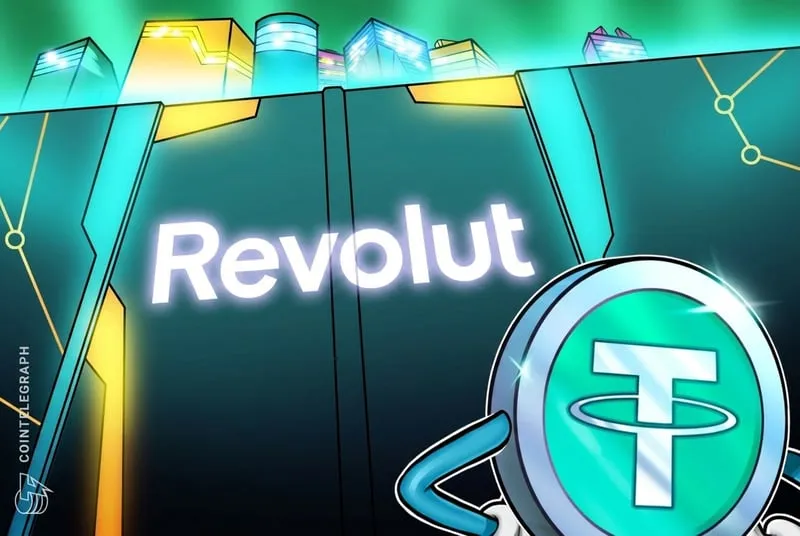
Revolut told customers it will remove Tether’s USDT, citing regulatory and risk considerations under the EU’s MiCA framework. Buying stops on July 6, deposits close on July 30, and the full delisting completes on August 31.
Any USDT still held on that date is automatically converted into the user’s base currency at the day’s rate. Revolut secured its MiCA license from Cyprus in late 2025, and Tether has declined to meet the regime’s reserve requirements, leaving compliant venues to unwind the asset.
Zypto take: A delisting notice is a reminder of who actually holds the asset. When the balance lives on a platform, that platform decides when it stays, when it goes, and what it converts into.
Self custody flips that arrangement. Value you hold across 24,000+ crypto assets and stablecoins in Zypto App stays yours regardless of which venue is in or out of favor, because the keys never leave your device.
German savings and cooperative banks open crypto to 80 million customers
 Source: BeInCrypto
Germany’s Sparkassen and cooperative banking groups are rolling crypto trading directly into their everyday banking apps, reaching institutions that hold roughly 80 million customer relationships. DZ Bank’s meinKrypto is already live inside the VR Banking App with Bitcoin, Ethereum, Litecoin and Cardano, and DekaBank follows this year.
BaFin licensed the offering under MiCA in late 2025, with Boerse Stuttgart Digital handling custody. Banks that dismissed the asset class as too risky four years ago are now the ones onboarding retail users to it.
Zypto take: This is participation arriving through the front door people already use. Tens of millions meeting crypto inside a familiar app is exactly the kind of on-ramp the industry has waited for.
The next question those users reach is ownership. Buying inside a bank app is a first step, and moving into a self-custody home like Zypto App is where holding your own keys begins.
UK’s FCA publishes final crypto rules to pull global trading onshore
 Source: CoinDesk
The Financial Conduct Authority released its final crypto framework, designed to make Britain a competitive venue by letting overseas trading platforms serve UK customers through locally authorized branches rather than isolated UK-only liquidity. Non-UK stablecoins are allowed to circulate, and capital buffers land below the EU equivalent.
Industry welcomed the clarity while warning about the road ahead. The FCA has not yet defined which foreign jurisdictions qualify, and AML registration has historically rejected more than 85% of applicants.
Zypto take: Rules that connect a country to global liquidity instead of walling it off reflect how people already use crypto, across borders and across chains. That is the shape of a healthy market.
Movement across ecosystems should not depend on where you happen to live. Zypto’s multichain wallet already routes value across 20+ blockchains through 1,000,000+ crosschain routes, no branch or border required.
Kraken lets traders post tokenized stocks as collateral
 Source: Cointelegraph
Kraken now accepts select tokenized stocks and ETFs as collateral for futures and margin trading, so eligible clients outside the US can borrow against holdings without selling them. The initial set spans about 10 names including Apple, Nvidia, Tesla, the SPDR S&P 500 ETF and Invesco’s QQQ.
Each asset carries a risk-based haircut, from 10% on broad-market ETFs to 30% on more volatile stocks, with per-asset collateral caps. Availability is limited to eligible jurisdictions outside the United States.
Zypto take: Equities becoming collateral onchain is the moment tokenized stocks stop being a demo and start behaving like usable assets. The real world and the onchain world keep converging.
Zypto reads that convergence through utility. Holding real-world assets alongside crypto in one self-custody app is what turns tokenized value into something people can actually put to work.
Key Takeaways
- European regulation has moved from principle to timetable, and the practical result is that platforms, not holders, decide which assets stay listed.
- Adoption is arriving through familiar channels, from bank apps to national card programs, which widens the on-ramp but does not by itself hand people ownership.
- The strongest position in a fast-moving rulebook is self custody, because keys on your own device do not get delisted, repriced, or geofenced.
- Watch how quickly tokenized real-world assets move from trading novelty to everyday collateral. That is where onchain finance starts touching ordinary balance sheets.
Related topics