The line between crypto policy and everyday financial life is getting shorter by the day. One state is now taxing every transaction, Congress has locked out a federal digital dollar, Africa is getting stablecoin payment rails backed by a major fintech investment, and Nigeria’s dollar-denominated crypto adoption is large enough to worry the IMF.
- Illinois Governor Pritzker signs a 0.2% privilege tax on all digital asset transactions, effective 2027
- Congress slips a CBDC ban through 2030 into a housing bill, explicitly carving out private stablecoins
- Ripple backs Flutterwave’s $3.2 billion Series E, putting RLUSD and XRP Ledger into African cross-border payments
- Nigeria absorbed $59 billion in crypto inflows in one year, with stablecoins dominating, and the IMF says suppression efforts won’t work
- BitGo offers European crypto firms a MiCA compliance path hours before the licensing deadline lands
Each story sits at the same crossroads: who decides the rules of owning and moving digital money, and whether those rules leave room for the people who most need it.
Illinois signs a 0.2% tax on every crypto transaction
 Source: CoinTelegraph
Illinois Governor JB Pritzker signed a $55.9 billion state budget on June 17, 2026, that includes a 0.2% “privilege tax” on all digital asset transactions involving Illinois residents. The tax takes effect January 1, 2027, applies to registered digital asset brokers, and is broadly defined to catch out-of-state platforms with sufficient Illinois customer activity. Several major crypto firms are headquartered in the state, including Zero Hash, Jump Crypto, Bitnomial, and Apex Crypto.
Illinois becomes the only US state to tax digital asset users regardless of whether they made a gain, profit, or any income whatsoever. The Crypto Council for Innovation called it extraordinary and compared it to taxing email correspondence because it uses a different delivery mechanism than post. a16z Crypto’s Miles Jennings said there is “effectively no comparable state financial transaction tax on stocks, bonds or derivatives anywhere in the country.” The state expects the measure to raise over $800 million to plug its budget gap.
Zypto take: A flat transaction tax on every trade, regardless of profit, is a different animal from capital gains taxation, and Illinois residents should understand that distinction clearly. Capital gains taxes apply when you sell at a profit. This tax applies when you transact, full stop.
At 0.2%, the cost is manageable on larger moves, but it stacks on every single trade and has a chilling effect on frequent, smaller activity. The industry’s comparison to taxing email is more than a rhetorical flourish: it targets the technology, not the gain, which sets a troubling precedent.
The wider signal for crypto users across the US is that state-level policy is now moving faster than federal, and in multiple directions at once. Some states are positioning as crypto-friendly; Illinois has made a different choice.
For anyone who holds crypto across many chains and needs to move value without accumulating invisible overhead on each leg, the practical answer is to understand exactly what transactions trigger tax obligations in your jurisdiction. That starts with clear custody of your own assets. Zypto App holds 24,000+ assets across 20+ blockchains on your own device, so you control when and what you move rather than relying on a platform to make those decisions for you.
Source: CoinTelegraph
Congress bans the Fed from issuing a CBDC until 2030
 Source: CoinTelegraph
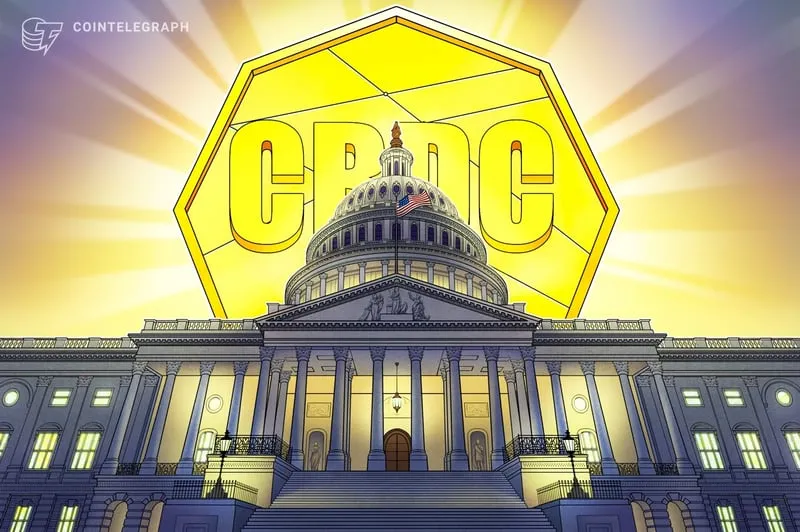
House and Senate leaders agreed on a bipartisan housing reform package, the 21st Century Road to Housing Act, that includes a provision banning the Federal Reserve from issuing a central bank digital currency or any substantially similar instrument until December 31, 2030. The bill also prohibits institutional investors from purchasing existing single-family homes for rental purposes. The CBDC language includes a specific carve-out for private stablecoins that are “open, permissionless, and private,” drawing a clear legislative distinction between government-issued digital money and privately issued dollar-pegged tokens.
President Trump signed an executive order in January 2025 directing federal agencies to cease CBDC-related work. This bill now puts that direction into statute, at least through 2030, and clears legislative bandwidth for the CLARITY Act before August recess.
Zypto take: What matters here is not the ban itself but the framing that surrounds it. The carve-out language, open, permissionless, private, reads like a definition of what good digital money looks like from Congress’s perspective, and it aligns almost exactly with what privately issued stablecoins are already doing. A CBDC, by design, would be programmable by the issuer, traceable end to end, and revocable in ways that cash and most stablecoins are not.
The distinction between a government digital dollar and a privately issued one is the same distinction that exists between money your bank holds and money you hold yourself. The CBDC debate tends to get framed as a technical question about payment infrastructure, but the ownership question underneath it is what actually matters.
Keeping value in a form that cannot be frozen, recalled, or restricted by a single authority is the foundation of what self-custody means. The multichain wallets in Zypto App store your keys on your own device, which is as close to that principle as crypto gets in practice.
Source: CoinTelegraph
Ripple backs Flutterwave to put stablecoin rails across Africa
 Source: CoinDesk
Ripple took a stake in Flutterwave’s Series E funding round, valuing the African payments company at $3.2 billion, with the deal integrating Ripple’s RLUSD stablecoin and the XRP Ledger into Flutterwave’s cross-border payment infrastructure across the continent. RLUSD currently has $1.6 billion in supply, growing roughly 20% this year.
Ripple’s managing director for the Middle East and Africa, Reece Merrick, said Flutterwave had “built one of the most advanced payments networks in Africa, and as its infrastructure evolves, stablecoins are becoming central to that story.” The goal is to reduce the cost and speed overhead of international money movement for African businesses by settling in digital dollars rather than routing through correspondent banking networks.
Zypto take: Cross-border payments in Africa have long been constrained by a correspondent banking structure that is expensive, slow, and built around access to the US financial system rather than around the actual needs of the people using it. Routing through New York to send money from Lagos to Nairobi is the kind of overhead that exists because of institutional path dependency, not because there is no better option.
Stablecoins remove that path dependency. When two parties can settle in digital dollars without a correspondent bank in the middle, the transaction is faster, cheaper, and does not require both parties to have the same banking relationship.
RLUSD on XRP Ledger is one implementation of that idea. Zypto App supports RLUSD alongside every asset on the XRP Ledger, and XRP is available as a payment option across all products and services in the app. The underlying principle is the same: value that moves on open rails does not require permission from a chain of intermediaries to get where it is going.
Africa’s remittance volumes are measured in the hundreds of billions annually. That is a structural shift in who can participate in cross-border commerce.
Source: CoinDesk
Nigeria absorbed $59 billion in crypto inflows and the IMF says it cannot be stopped
 Source: Decrypt
A new IMF report found that Nigeria received $59 billion in crypto-asset inflows between July 2023 and June 2024, accounting for 60% of all stablecoin inflows within sub-Saharan Africa since 2019. The fund identified several risks: digital dollarization that threatens the Central Bank of Nigeria’s grip on monetary policy, financial integrity gaps because traditional AML systems cannot monitor stablecoin transactions effectively, and a threat to monetary sovereignty at scale.
The IMF’s conclusion on attempts to suppress stablecoin use was direct: they “are likely to be only partly effective.” Its recommended path forward is to strengthen monetary frameworks and payment infrastructure rather than to attempt prohibition.
Zypto take: Sixty billion dollars in one year is a population voting with its money, choosing digital dollars because local currency and a constrained banking system have consistently failed to protect purchasing power.
Nigeria’s experience is the clearest real-world proof that demand for digital dollars is grounded in genuine financial need. When local currency is unreliable and banking access is limited, people find another way to store and move value.
The IMF reaching this conclusion carries weight precisely because the fund approaches crypto regulation from a cautious, institution-preserving perspective. The report is effectively saying: the adoption is real, it is durable, and the policy response has to engage with that reality on its own terms.
For users in emerging markets holding stablecoins for everyday stability, the question is not whether to adopt digital dollars but how to do it with full ownership intact. A balance that lives on your own keys cannot be frozen by a monetary policy decision or a platform’s compliance policy. That is the difference that self-custody makes in markets where the rules can change without notice.
Source: Decrypt
BitGo offers European crypto firms a MiCA compliance path at the deadline
 Source: CoinDesk
BitGo Europe, licensed by Germany’s BaFin, launched a Crypto-as-a-Service compliance platform targeting European crypto businesses that have not secured their own Markets in Crypto Assets licenses before the end-of-June 2026 deadline. Firms can integrate their existing wallets and client relationships into BitGo’s MiCA-compliant infrastructure while maintaining their own customer-facing operations. CEO Mike Belshe explained the model: “All of your clients can be onboarded and have sub-accounts inside of BitGo…they are now in segregated safe storage that’s MiCA-compliant.”
Europe had over 3,000 registered crypto businesses as recently as 2024; by May 2026, only 194 had achieved full CASP authorization. Industry estimates suggest roughly 75% of pre-MiCA firms will lose their registration status as transitional periods expire. BitGo charges “a couple of $1,000 a month” as a base fee.
Zypto take: MiCA is the most significant regulatory event in European crypto in years, and its most important design decision was the one that barely made news: non-custodial wallets sit explicitly outside CASP scope. The regulation applies to service providers, not to individuals holding their own keys. That carve-out is not an accident. It reflects the legal and philosophical consensus that self-custody is ownership, not a financial service.
The firms scrambling for compliance today are those whose business models depend on holding customer assets. That is a different model from what Zypto App represents. A self-custodial wallet does not require a MiCA license because the user is the custodian.
The regulatory pressure that is forcing 75% of European platforms to restructure or shut down does not touch the ownership layer at all. For anyone paying attention to where the regulatory trend lines are pointing, holding your own keys is the lowest-overhead path through regulatory change. In the current environment, that advantage is only growing.
Source: CoinDesk
Key Takeaways
- State-level crypto policy is moving faster than federal, and in opposite directions. Illinois has made crypto transactions more expensive regardless of profit, while Congress has locked out a government digital dollar for four years. Users need to track their own jurisdiction, not just federal rules.
- The CBDC ban carve-out for “open, permissionless, private” stablecoins is Congress effectively endorsing the design principles that make private digital money preferable to a government-issued alternative. That framing will shape legislation beyond 2030.
- Africa’s stablecoin adoption is large enough to show up in IMF risk assessments, which means it is far beyond the pilot stage. When $59 billion flows into one country’s crypto ecosystem in a year and the IMF says it cannot be suppressed, that is confirmation that demand for dollar-denominated digital money in emerging markets is structural, not speculative.
- The MiCA deadline is a sorting event, separating platforms that hold customer assets, and therefore need licenses, from wallets where the user holds their own keys. Self-custody is outside regulatory scope by design, not by luck.
- The throughline across all five stories today is ownership. Who owns the keys, who controls the movement, and who decides the rules. Crypto’s value is most durable in the hands of the people who actually hold it.