The infrastructure of real-world crypto is being built from three directions at once today: a regulated yen stablecoin goes live in Japan, a major payments processor locks in its European license just before the MiCA deadline, and Bitcoin’s own network is seeing its highest transaction volume in two years. Regulators and builders are moving at the same pace, which is new.
- Japan’s SBI Group launches JPYSC, the first trust bank-backed yen stablecoin, with no transaction ceiling
- OpenPayd secures a MiCA license in Malta ahead of the July 1 deadline, unlocking stablecoin services across the EEA
- Four U.S. law enforcement groups warn the CLARITY Act’s safe-harbor provision could shield illicit crypto flows
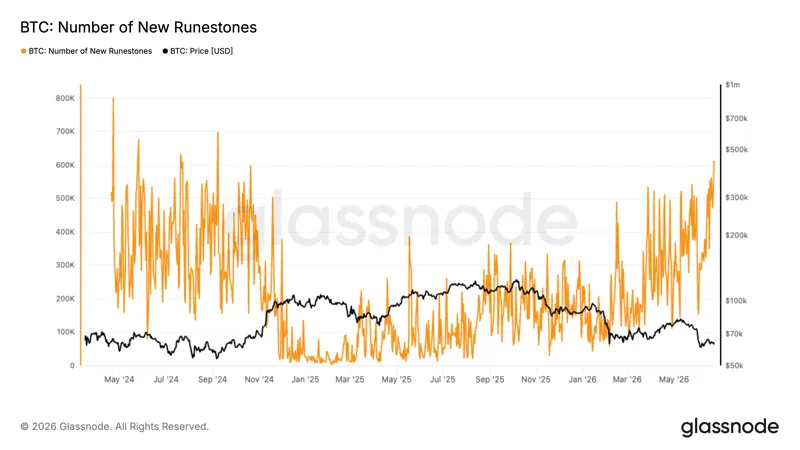
- Bitcoin’s Runes protocol pushes daily transactions past 820,000, the highest count since April 2024
The common thread across today’s stories: stablecoins and crypto infrastructure are becoming more formal, more regulated, and more embedded in existing financial systems. That shift favors utility over speculation.
SBI Group launches Japan’s first trust bank-backed yen stablecoin
 Source: The Block
SBI Group launched JPYSC on Wednesday, making it the first yen stablecoin issued through a trust bank structure in Japan. The token is issued by SBI Shinsei Trust Bank, distributed by SBI VC Trade, and developed in partnership with Singapore-based Startale Group.
The trust bank classification matters: JPYSC is registered as a Type 3 electronic payment instrument under Japan’s Payment Services Act, which removes the 1 million yen per-transaction and balance ceiling that applied to earlier fund-transfer stablecoins. That opens a path to institutional-grade uses including onchain foreign exchange markets, corporate lending, and settlement for tokenized real-world assets. For now, JPYSC is available only to SBI VC Trade account holders while broader regulatory and tax guidance is finalized.
Zypto take: Japan has been building toward this for two years, and the trust bank structure finally removes the ceiling that made earlier yen stablecoins impractical for institutional use. Zypto App already supports stablecoins across 20+ blockchains, and as regulated local-currency stablecoins like JPYSC expand multichain, they slot naturally into the kind of crosschain movement infrastructure that makes crypto useful at scale.
OpenPayd secures a MiCA license with a week to spare
 Source: CoinTelegraph
OpenPayd received authorization as a crypto asset service provider from Malta’s Financial Services Authority on June 24, days before the EU’s July 1 MiCA transitional deadline. The license, which passports across the European Economic Area, covers fiat-to-stablecoin conversion and related financial services for businesses.
The company processes more than $240 billion in annualized transaction volume for over 1,100 business clients including Kraken, OKX, eToro, and B2C2. OpenPayd joins Bitcoin Suisse and Ripple in the growing roster of MiCA-licensed operators and has separately announced a proposed Nasdaq listing under the ticker “OP,” valuing the company at approximately $1.1 billion.
Zypto take: Every new MiCA license is another piece of stablecoin infrastructure that works within the regulatory perimeter rather than around it. For users who hold or move stablecoins, that means more compliant on-ramps, better banking relationships for the platforms they use, and less operational risk from the operator side. The EU’s regulated layer is now thick enough to build serious products on.
Law enforcement groups push back on CLARITY Act safe harbor
 Source: The Block
Four major U.S. law enforcement organizations sent a joint letter to the DOJ and White House on Tuesday warning that Section 604 of the Clarity Act could hamper crypto crime investigations. The signatories were the National District Attorneys Association, National Association of Assistant United States Attorneys, International Association of Chiefs of Police, and National Sheriffs’ Association.
Section 604, also called the Blockchain Regulatory Certainty Act, would create a safe harbor for non-custodial developers and clarify they are not money transmitters. The law enforcement groups argue the provision contains “broad exemptions that may shield individuals or entities whose activities facilitate the movement of digital assets.” Nearly 100 Catholic leaders raised similar concerns the same day, specifically around human trafficking protections. White House crypto adviser Patrick Witt countered that the bill is “pro-regulatory, pro-enforcement.”
Zypto take: The tension here is real and worth watching. Safe-harbor clarity for non-custodial developers is exactly what allows software like Zypto App to exist: you own your keys, no one is holding your assets on your behalf. The law enforcement objection deserves a proper legislative answer, but the remedy should be targeted at bad actors, not at the infrastructure of self-custody itself.
Bitcoin Runes push daily transactions to a two-year high
 Source: CoinDesk
Bitcoin’s daily transaction count crossed 820,000 on Tuesday, its highest level since April 2024, driven by a resurgence in the Runes protocol. Rune-related transactions (Runestones) exceeded 600,000 per day, according to Glassnode data, and Rune activity now accounts for roughly 25% of all Bitcoin transaction fees.
The timing is notable: Bitcoin is currently trading around $62,000, roughly 50% below its October all-time high, a point in the cycle when network activity typically softens. The Runes protocol, which enables fungible tokens on Bitcoin in a way structurally similar to Ethereum’s ERC-20 standard, launched at the April 2024 halving and appears to be driving a second wave of usage.
Zypto take: Bitcoin building onchain utility during a bear market is the kind of signal that matters more than short-term price. A network that generates demand for block space from applications, not just transfers, is a healthier network. For anyone using Zypto App to hold or move Bitcoin across 20+ blockchains, this is the underlying infrastructure getting stronger.
Key Takeaways
- Regulated local-currency stablecoins are arriving in major economies. Japan’s JPYSC removes the institutional barriers that capped earlier yen stablecoins, and Europe’s MiCA framework is producing a new class of compliant operators.
- The CLARITY Act debate is sharpening around a real question: how to protect self-custody infrastructure without creating gaps that benefit bad actors. The answer matters for every non-custodial product in the space.
- Bitcoin’s Runes activity shows that crypto networks can attract genuine usage independent of price. Application-driven demand for block space is a structural shift worth tracking.
- The direction across all four stories is the same: crypto infrastructure is becoming more regulated, more institutionally accessible, and more embedded in real financial systems. That’s the environment Zypto was built for.