
Gm frens, welcome to the second news round-up of July!
Trump reports over $1.2 billion in crypto, Germany’s banking giants get into crypto, as Algorand is poised for growth. World Cup leads to $5.6B explosion in prediction markets; a trader makes 357x gains with a CZ meme coin, while analysts maintain an ambitious $150K year-end Bitcoin target. Lastly, Zypto launches a new way to research crypto.
Let’s dive in.
Trump reports over $1.2 billion in crypto earnings
The U.S. Office of Government Ethics released President Donald Trump’s annual financial disclosure, revealing sizable earnings from his various cryptocurrency ventures in 2025. The report, totaling over 900 pages, details income and financial holdings from the president’s many businesses, with crypto prominently among the largest line items.
In total, President Trump earned more than $1.2 billion from crypto ventures. Trump also reported holding over $50 million in Bitcoin and between $5 million and $25 million in Ethereum, among other digital assets.
President Trump earned just over $635 million from his meme coin alone, with royalties from a licensing agreement with Celebration Coins accounting for almost all of it. The meme coin, which trades as TRUMP, launched on the Solana network just days before Trump retook office in January 2025.
The president also reported more than $588 million in net proceeds from token sales distributed by World Liberty Financial, a decentralized finance and stablecoin venture operated by the Trump family and business associates. The filing follows a prior disclosure revealing the president’s gains from securities trading, including various crypto-related stocks.
Trump’s crypto ventures remain a point of contention among American lawmakers, including top Democrats who oppose the passage of the crypto-focused Clarity Act. Democrats opposed to the bill have argued, however, that it should not be passed without ethics language barring the president and his family from engaging in cryptocurrency-related businesses.
Germany’s banking giants bring crypto to 80M customers
Germany’s two largest banking networks are undergoing a major shift by integrating cryptocurrency trading directly into their banking apps. This includes Sparkassen savings banks and the co-operative Volksbanken Raiffeisenbanken. Through this initiative, the banking network will enable millions of regular retail customers to buy and sell digital assets without third-party cryptocurrency exchanges.
These organizations collectively cater to about 80 million clients across Germany, making it one of Europe’s largest integrations of crypto into traditional banking. For its part, this shift is noteworthy because, only four years ago, both banking groups had written off cryptocurrencies as being too risky. Now, they are creating their own regulated cryptocurrency infrastructure rather than collaborating with outside exchanges.
Through DZ Bank, the cooperative banks have already introduced the meinKrypto platform. The platform allows local Volksbanken and Raiffeisenbanken to deliver Bitcoin (BTC) and Ethereum (ETH) directly to millions of retail savers. It runs under the European Union’s Markets in Crypto-Assets (MiCA) framework, and after the approval announcement in January, meinKrypto went live.
At the same time, Boerse Stuttgart Digital offers crypto custody, ensuring that asset storage and trading remain governed by German regulations. Meanwhile, DekaBank is getting ready to launch a comparable service for the nation’s savings banks.
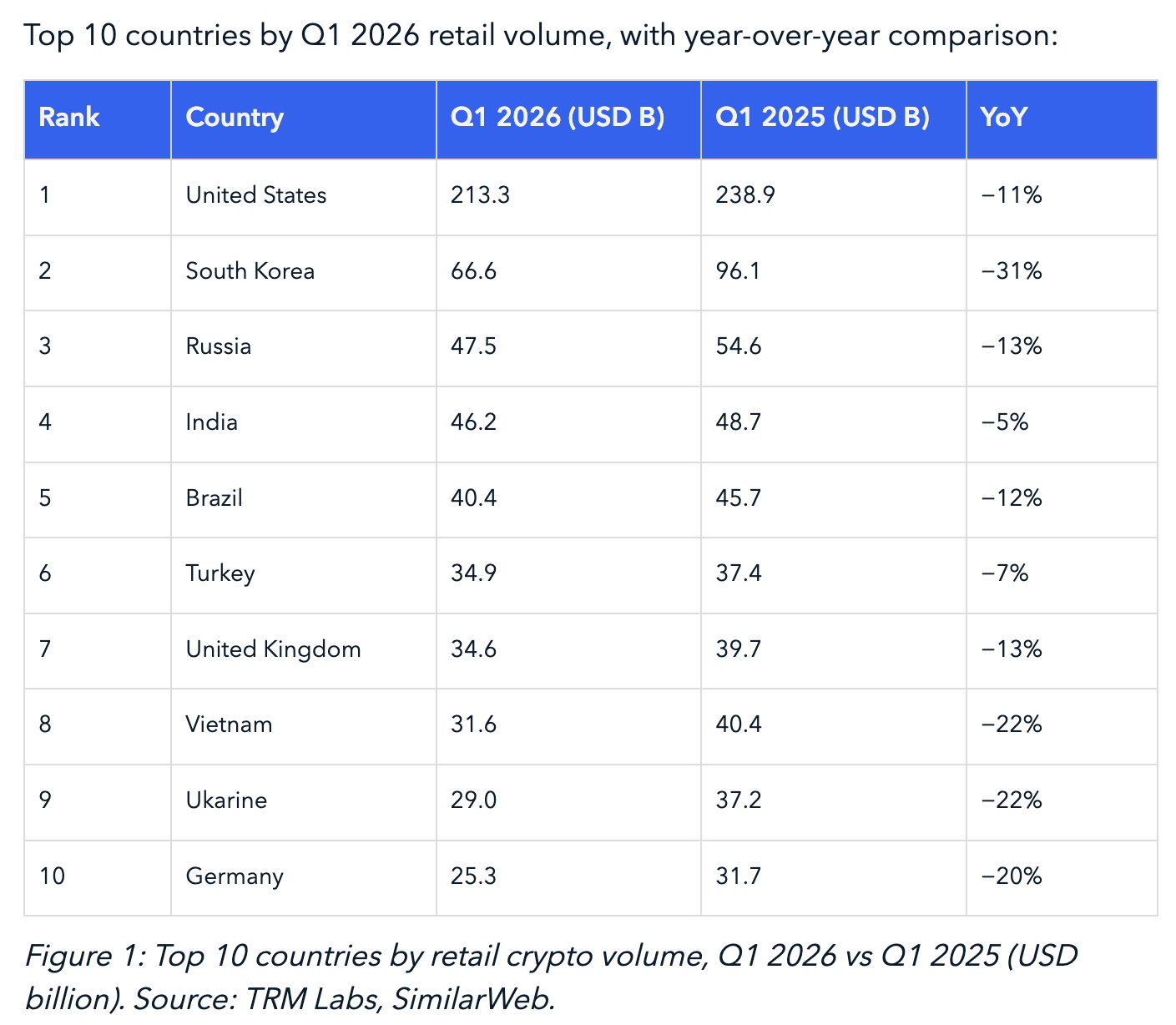
Needless to say, the initiative has drawn criticism. This is because only a few percent of Germans who own cryptocurrency trust their main banks far more than independent cryptocurrency platforms. Despite this, Germany remains among the top 10 countries by retail volume in Q1 2026.
Algorand poised for growth after France’s new quantum rule
France will stop certifying security products that lack quantum-resistant encryption from 2027. The decision hands fresh urgency to Algorand’s (ALGO) pledge to deliver broad quantum security across its blockchain by the end of that same year.
The French cybersecurity agency ANSSI announced the cutoff at the France Quantum conference in Paris. Samih Souissi, ANSSI’s chief of staff, said the agency will certify only quantum-resistant security products from 2027.
He added that businesses should buy only quantum-safe products by 2030. ANSSI certification is a gateway for sales into French government agencies and critical infrastructure. The qualification process typically takes 12 to 18 months, so vendors starting now barely fit the window.
Meanwhile, Washington is accelerating the adoption of post-quantum cryptography across federal and national security systems. The U.S. is moving on a parallel track as President Trump signed quantum executive orders. The order requires federal agencies to adopt approved post-quantum standards by the end of 2031.
The Algorand Foundation published its post-quantum roadmap in June, targeting quantum resilience across every network layer by the end of 2027. The plan covers user wallets, developer tooling, and consensus.
Native post-quantum accounts arrive in Q3 2026 and are built on the lattice-based Falcon signature scheme. Algorand has used Falcon for State Proofs since 2022. Multi-signature support and a foundation treasury migration will follow before year-end.
France and the U.S. have converged on 2027 as the year quantum readiness becomes a pass-fail procurement test. Whether rival chains can match Algorand’s schedule may determine which networks institutions trust with decades’ worth of data.
World Cup leads to $5.6B explosion in prediction markets
The 2026 FIFA World Cup has become the biggest driver of activity on prediction platforms, diverting attention from the political and macroeconomic markets around which they were originally built.
This is according to data showing that the tournament has driven prediction market volumes from just $65 million on June 1 to a monthly peak of $5.6 billion on June 22.
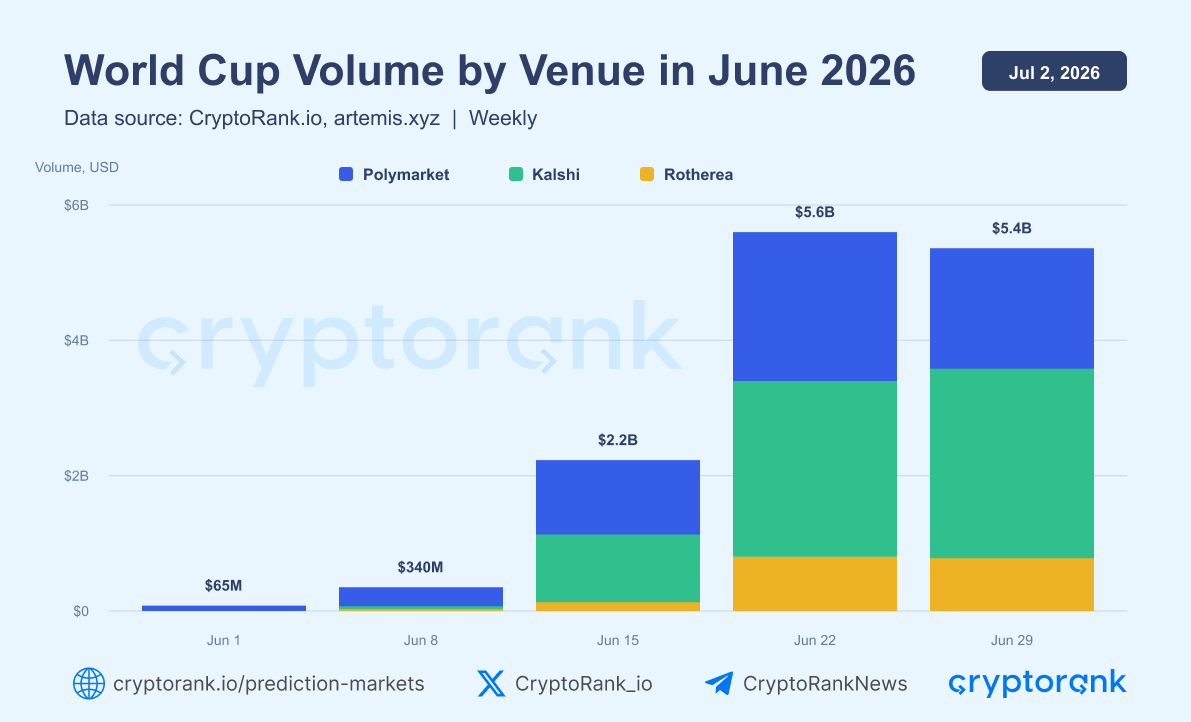
Throughout June, total trading volume across major prediction venues rose rapidly. It went from the aforementioned $65 million on June 1 to $340 million on June 8, just days before the World Cup started. A week later, on June 15, the volume jumped to $2.2 billion. By June 22, trading volume on the platforms had hit $5.6 billion. It then reduced slightly to $5.4 billion on June 29.
Multiple research institutions have projected that the total global trading volume on prediction markets could reach $10 billion. So far, most of the traffic has been directed to centralized platforms, given their lower barriers to entry compared to on-chain prediction products.
Kalshi accounted for much of the June activity, so Polymarket’s more subdued performance has come against a backdrop of criticism on several fronts. For instance, a Wall Street Journal (WSJ) investigation alleged that Polymarket has been using staged winning bets in promotional videos.

Trader makes 357x gains with CZ meme coin
An anonymous trader turned a $754 bet into roughly $271,000 in under 48 hours, scoring a 357x return. The windfall came from CZ, a BNB Chain meme coin tied to Canadian businessman Changpeng Zhao.
According to Lookonchain, the wallet acquired roughly 5.1 million CZ tokens across three transactions totaling $754.49. Furthermore, the average entry price sat near $0.000147 per token during the early accumulation phase. The payoff was explosive at its peak.
As the token surged, the position’s value skyrocketed to around $271,000. However, the meme coin has since pulled back from $0.0592 to $0.0418. As a result, the holder’s unrealized gains have eased to roughly $246,000, though the trader still holds 100% of the position without selling a single token.
The token itself draws direct inspiration from a viral CZ tweet. On January 17, 2021, Zhao made an X post that became legendary crypto folklore. He wrote, “Everyone knows I’m a bull. You haven’t even seen my final form yet,” alongside an image of a muscular bull.
While the trade looks glamorous, the trader’s history reveals the harsh reality of meme coins. Over the past two months, the wallet made roughly 260 trades with just a 31.88% win rate. Most positions ended in losses. The context matters because this single outlier dramatically offset a long string of failures. As a result, a single successful bet can mask the fact that most speculative meme coin trades do not pay off in the long run.
However, experts caution that such extreme returns remain rare. Meme coins can pump violently and then correct just as sharply. Sustainable success requires discipline, risk management, and the understanding that most participants never achieve life-changing results.
Analysts maintain ambitious $150K year-end Bitcoin target
Since reaching a new all-time high above $125,000 last October, Bitcoin has failed to meet lofty future price targets set by enthusiasts and analysts alike. Bitcoin’s current bear market has erased more than 50% of its value since that time.
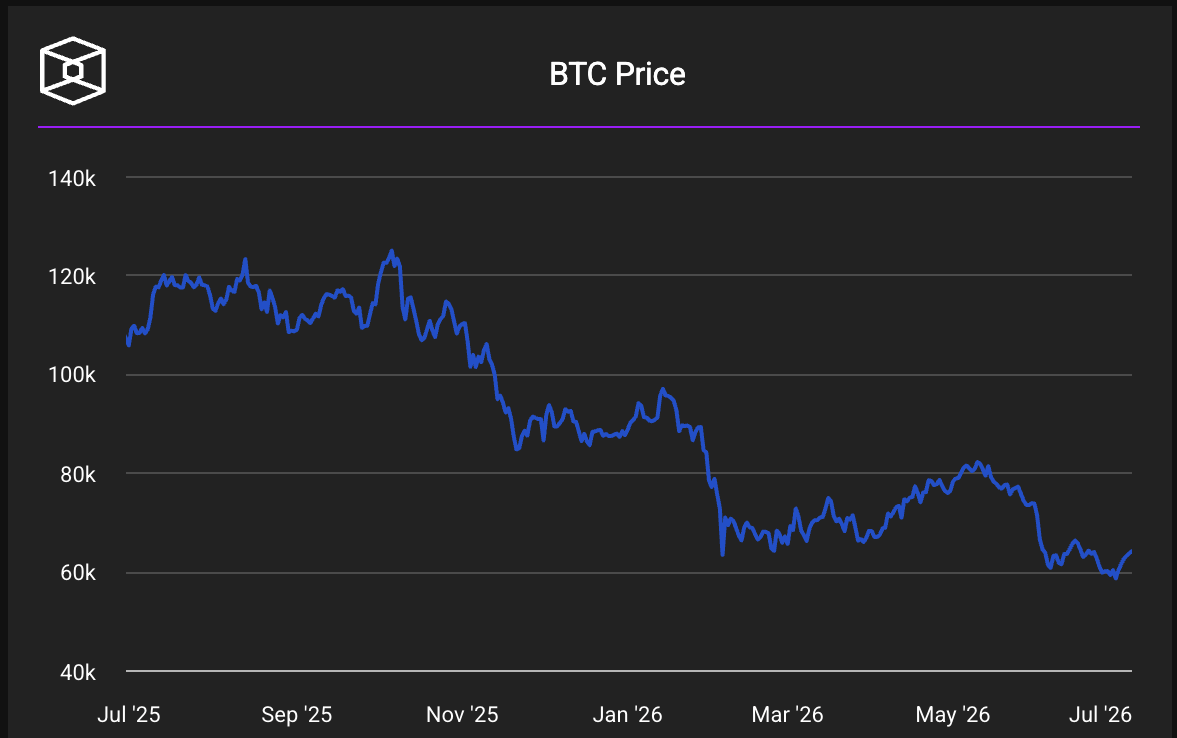
The foremost cryptocurrency retested recent lows around $60,000 before bouncing to roughly $63,000 on Monday. Bernstein analysts led by Gautam Chhugani framed the milder correction as a sign that crypto is maturing, while cautioning that it is unclear whether the market is fully clear of the downturn.
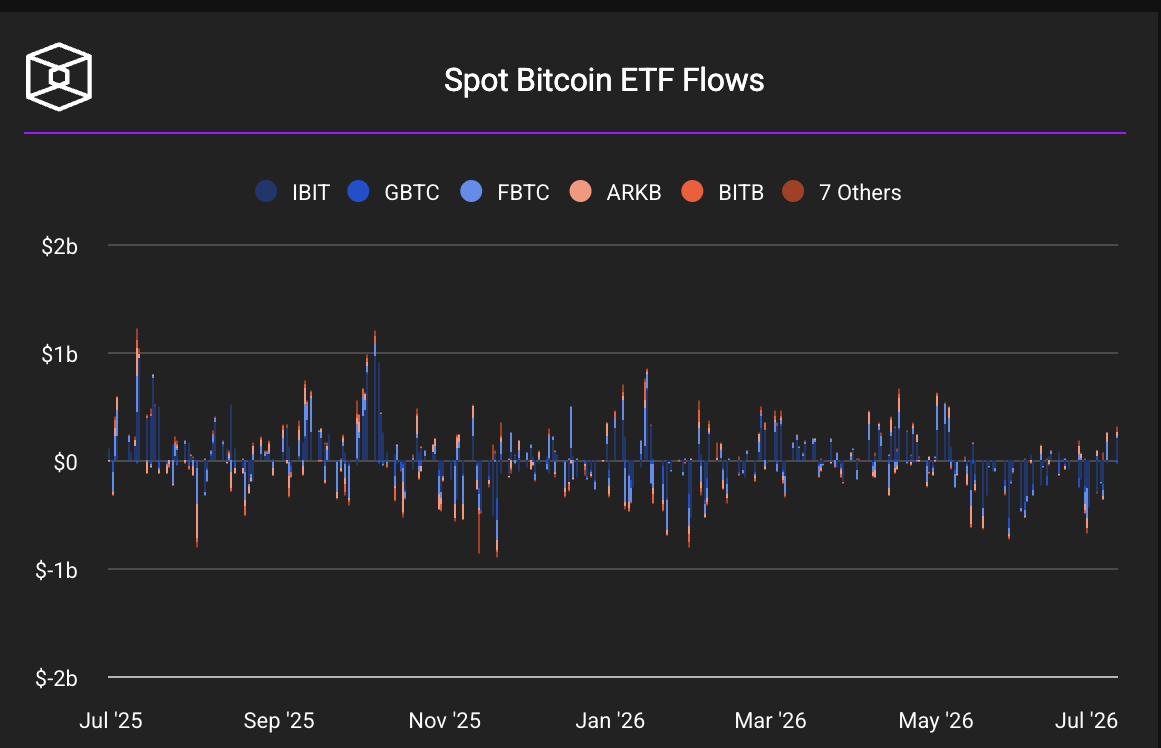
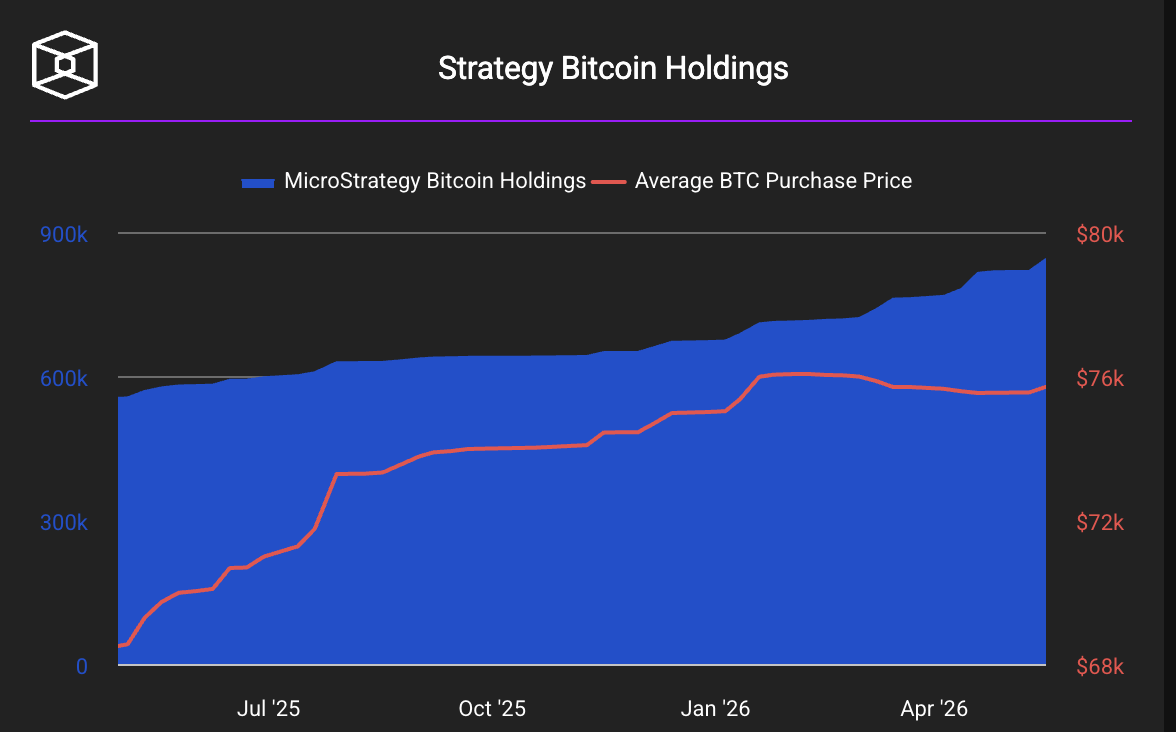
Combined inflows from treasury companies and ETFs reached $10 billion in 2026, down sharply from $60 billion in 2025. Spot Bitcoin ETFs have shed $5.5 billion this year against a $74 billion asset base. This means treasury companies, Strategy being the main one, have driven the net positive flows.
The analysts argued that ETF outflows, paired with a roughly 50% price correction, made sentiment feel worse than the underlying flow picture suggested. In a market where liquidity is concentrated in AI equities, a net positive inflow year for Bitcoin looked less alarming, they deduced.
Strategy has acquired about 175,000 BTC for roughly $14 billion in 2026, lifting its holdings to 847,363 BTC. STRC, its primary preferred perpetual offering, trades at 487.87 per $100 of face value. Still, the company holds enough balance sheet liquidity to cover cash dividends and interest for more than 17 months.
Strategy’s accumulation has offset selling by leading U.S. Bitcoin miners, who are redirecting capital toward AI data centers. Bernstein expects the largest U.S.-listed miners to abandon Bitcoin mining entirely, with their share of the hash rate absorbed by international operators across Southeast Asia, Central Asia, and Latin America.
Bernstein pointed to continued regulatory momentum, with GENIUS Act rulemaking on stablecoins ongoing and crypto perpetual futures now rolling out in the U.S. through Kalshi and Coinbase. The firm puts the odds of the Clarity Act passing in 2026 at 50%. If that regulatory advancement occurs, the firm will expect greater market liquidity and institutional adoption of both crypto-native and real-world assets.
Bernstein called its $150,000 year-end target for Bitcoin ‘ambitious,’ given the correction, while maintaining that the cycle will eventually turn. To reach this level, Bitcoin would need to jump nearly 135% from its current mark.
Zypto launches a new way to research crypto
Zypto has rolled out a redesigned crypto research experience across its web platform, aiming to make it faster and more intuitive to discover, compare, and understand digital assets for everyday users and professionals alike.
The update brings together live prices, real-time charts, liquidity data, and token analytics into a single interface. This helps users evaluate more than 25,000 cryptocurrencies without juggling multiple sites, browser tabs, or specialized tools.
By consolidating market data, visual heatmaps, and blockchain guides into one research layer, Zypto is positioning its app and web platform as a go-to hub for both quick checks and deeper due diligence on emerging and established crypto projects.
The company says the refreshed research experience is designed to help users move beyond hype and headlines, surfacing practical metrics such as price history, trading volumes, and pool liquidity that can inform more disciplined portfolio decisions.
This new research stack sits alongside Zypto App’s existing wallet, payments, cards, and multichain swap infrastructure. It reinforces the platform’s vision of an all-in-one crypto ‘super app’ that covers the full lifecycle from discovery and analysis through to execution.
Zypto’s research tools now span everything from top-cap coins to niche tokens, giving users broader visibility into market breadth while maintaining self-custody and direct control over their assets within the same ecosystem.

Closing remark
President Trump’s 2026 financial disclosure, which reports over $1.2 billion in crypto earnings, intensifies political scrutiny of conflicts of interest. Germany’s largest banking networks are integrating regulated crypto trading into their apps, marking a major shift toward mainstream adoption.
France’s mandate for quantum-resistant encryption by 2027 positions Algorand to benefit immensely. The 2026 World Cup fueled a surge in prediction market activity, with trading volumes skyrocketing in June.
An anonymous trader achieved a 357x return on a CZ-themed meme coin, though the gain underscores the high-risk, low-consistency nature of speculative trading. Despite a sharp correction and weaker ETF inflows, analysts maintain a $150,000 Bitcoin price target.
Zypto’s new rollout comes as retail and professional crypto participants demand clearer, more contextual information about the assets they hold and trade.
FAQs
How much did Trump earn?
President Trump earned more than $1.2 billion from crypto ventures, including $635 million from his meme coin (TRUMP) alone.
What is the meinKrypto platform?
It is a platform that enables local German banking institutions, Volksbanken and Raiffeisenbanken, to deliver Bitcoin (BTC) and Ethereum (ETH) directly to millions of retail savers.
How can Algorand benefit from France's quantum rule?
France will ban non-quantum-resistant security certifications by 2027, accelerating Algorand's (ALGO) push to deploy broad quantum security across its blockchain.
How did the World Cup impact prediction markets?
The 2026 World Cup has pushed prediction market volumes from just $65 million on June 1 to a monthly peak of $5.6 billion on June 22.
How much gain did the meme coin trader make?
The anonymous trader turned a $754 bet into roughly $271,000 in under 48 hours.