Dollars moved between Singapore and New York on a Saturday and landed in minutes. That is the tell for the whole day: the waits and the requirements everyone had accepted as the cost of moving money are being taken out one at a time, and the institutions doing it have stopped calling it a pilot.
- DBS and Citi cleared a weekend dollar payment across two time zones on Swift’s Digital Ledger.
- Switzerland’s most-used payment app joined the CHFD trial, which now has nine companies testing.
- Itaú lists 15 crypto assets and Nubank 28, while Brazil’s banks hold none of it themselves.
- A draft Ethereum proposal would let a transaction pay its own fee in any token, or let somebody else pay it.
Each one removes something the reader used to have to put up with. What none of them settles is whose name is on the asset when the movement stops.
Two banks move dollars on a Saturday
 Source: The Block
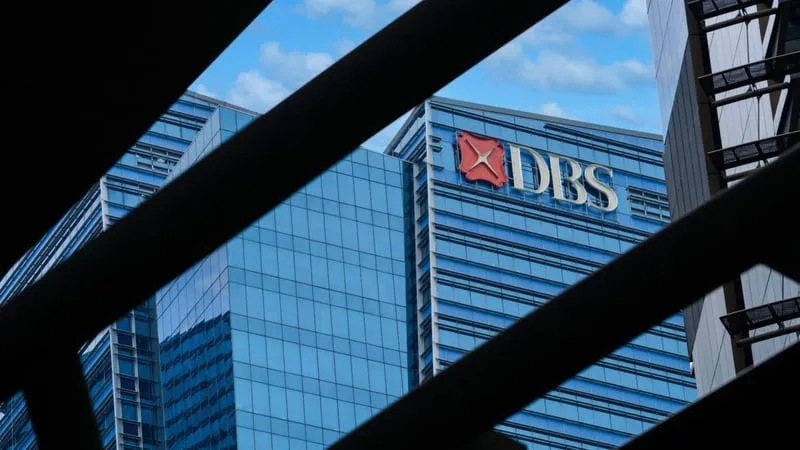
DBS and Citi say they have completed the first weekend US dollar cross-border payment between Singapore and the United States using tokenized deposits. The transfer ran on Swift’s Digital Ledger on September 5 and settled in minutes, against the two business days a conventional cross-border payment can take.
The point of the exercise was the timing rather than the size, which wasn’t disclosed. A payment initiated on a Saturday normally sits until the next working day in both countries, so the banks are targeting multinationals in e-commerce and digital services that trade through the weekend.
DBS is the only Asian-headquartered member of Swift’s twelve-bank digital ledger design group. Rachel Chew, DBS Group Chief Operating Officer, described the transfer as a demonstration of “how tokenized money is moving from experimentation to real-world adoption.” Citi is separately part of a tokenized deposit network at The Clearing House, expected in the first half of 2027.
Zypto take: Weekend settlement is a milestone for tokenized deposits and an ordinary afternoon for anyone holding stablecoins. The direction of travel is the story: the schedule money moves on is becoming its owner’s rather than the calendar’s.
Switzerland’s payment app joins the franc stablecoin trial
 Source: Cointelegraph
Nine Swiss companies have begun sandbox tests of CHFD, a Swiss franc stablecoin, with financial market operator SIX and the payment app TWINT joining as new participants. UBS and five banks started the initiative in April.
The trial has moved from design into testing, and the questions being asked are commercial rather than technical. Participants are looking at whether programmable payments can cut fraud on online marketplaces, give people fairer access to event tickets, and make public payments run more efficiently.
TWINT is the arrival that changes the shape of this. It’s the app a large share of Swiss adults already pay with, which means a franc token could reach shoppers through something on their phone rather than through anything new they have to be persuaded to install.
Zypto take: Most currency-pegged tokens come unstuck on distribution rather than design. Putting CHFD inside the app people already pay with is what turns a sandbox into a checkout, and meeting merchants where they already sell is the same job Zypto Pay does online and in person, at 0% merchant-side processing fees.
Brazil’s banks list the tokens and hold none of them
 Source: crypto.news
Brazil’s largest banks keep widening what customers can buy, and none of them carry any of it on their own balance sheets. Itaú now offers 15 crypto assets, Nubank lists 28 across more than seven million users, and Banco do Brasil’s Bitcoin and Ether service has moved over R$11 million, around $2.1 million, since January. Bradesco and Santander have expanded too.
Central Bank filings from March 2026 show no virtual assets held by the banks themselves. The shelf keeps growing while the institutions selling from it take no position.
Regulation is what unlocked this. Brazil passed its Legal Framework for Virtual Assets in 2022, the Central Bank published Resolutions 519, 520 and 521 in November 2025, and roughly 120 crypto firms face a licensing deadline of October 30, 2026, with capital and risk rules following in January 2027. Brazilians moved R$505.5 billion through crypto in 2025, about $98.7 billion, up 22% on 2024 and more than five times the 2020 figure.
Zypto take: A bank listing 28 tokens is selling access, and its own filings say it isn’t taking a position alongside you. That gap matters at the moment you want to move something: a balance on a bank’s platform is the bank’s to release, while a coin under keys on your own device in Zypto App is already yours to move. Download Zypto App.
An Ethereum transaction could pay its own fee in any token
 Source: Decrypt
A draft Ethereum proposal would let people pay transaction fees without holding ETH at all. EIP-8141, known as Frames, has been in draft since January and is co-authored by Matt Garnett, who argues it “should be the last transaction type we need for accounts.”
Frames splits a transaction into as many as 64 sequential contract calls, one to validate, one to approve payment, the rest to execute. Separating the signer from the payer is what does the work: fees can be settled in an ERC-20 token, or covered entirely by a sponsor, and several actions can be batched together.
The part that matters for ordinary wallets is that none of this requires moving to a smart account first. It’s also groundwork for post-quantum signatures, and there’s a testnet running on the ethrex client. No network upgrade has been scheduled for it yet.
Zypto take: Having to hold a second asset before you’re allowed to move the first one is where a lot of people give up on their opening transaction. Solving that inside the protocol beats any amount of explaining, and it comes from the same instinct as keeping 24,000+ assets swappable inside one multichain wallet rather than sending people out to bridges.
Key Takeaways
- Weekend and time-zone delays are being engineered out of settlement by the institutions that built them in, which says more than any single transfer.
- Distribution decides whether a currency-pegged token gets spent. The ones arriving inside an app people already open start well ahead.
- Access to an asset and ownership of it are separate products, and Brazil’s central bank filings are an unusually clean look at the difference.
- Regulatory clarity is turning into shelf space quickly. Brazil’s rules arrived in November 2025 and its banks were selling 28 tokens by this September.
- Progress is starting to show up as requirements quietly disappearing, and paying a network fee in whatever token you already hold looks like the next one to go.