Stablecoins moved a step closer to behaving like money. Japan’s regulator asked to stop making a token built for constant use drag a tax filing behind it, and the day’s other two stories land on the same point: usability decides whether a capability gets used.
- Japan’s FSA wants trust-type stablecoins exempt from beneficiary-by-beneficiary trust reports from April 2027.
- Three seconds to under 200 milliseconds, and no hard fork needed to get there.
- $79,076, unchanged over both 24 hours and seven days, through the first strikes on Iran in over a month.
A tax form, a proving time and a war headline look unrelated. Each one measures how much effort it takes to hold and move value on your own terms, and today all three read well.
Japan moves to drop a tax filing step for stablecoins
 Source: Cointelegraph
Japan’s Financial Services Agency has asked for trust-type stablecoins to be exempted from mandatory tax filings in the fiscal 2027 reform, dropping the beneficiary-by-beneficiary trust reports and calculation statements that carry every holder’s name and income details.
The FSA’s reasoning is that these tokens “circulate among a broad number of users, are used for frequent and numerous transactions” and that holding one earns you nothing. The exemption would take effect on April 1, 2027, if the legislature approves it, and follows July’s move to regulate crypto assets as financial instruments under Japan’s Financial Instruments and Exchange Act.
Zypto take: Naming every holder of a token built to change hands constantly was never going to survive contact with how people use it. Dropping the report treats a stablecoin as money rather than as a position someone is sitting on.
Stablecoins held in Zypto App already behave the way the FSA just described. They move between chains and then into a bill payment, a top-up or a card load, dozens of times a year rather than once.
Zcash private transactions get 14 times faster
 Source: Crypto Briefing
Zcash developer Zakura has released Zakura Common, an open-source cryptography library that cuts the time a wallet spends building a shielded transaction from more than three seconds to under 200 milliseconds. Mobile proof generation runs over 14 times faster, desktop over five times, and Sinsemilla hashing, a core operation in Zcash’s Orchard protocol, 21 times.
None of it needs a hard fork, a consensus change or a coordinated network upgrade. Compatible wallets integrate the library and start serving faster transactions. Sean Bowe said the libraries improve responsiveness “without requiring rule changes”. The proving happens on the sender’s device, so block production and confirmation times are untouched.
Zypto take: Privacy that costs three seconds a payment is a setting people switch off. At 200 milliseconds it stops being a decision anyone has to make.
Speed is what turns a capability into a habit. Two taps is why crosschain swaps inside the Zypto multichain wallet get used rather than admired.
Bitcoin barely moved when the strikes resumed
 Source: Bitcoin Magazine
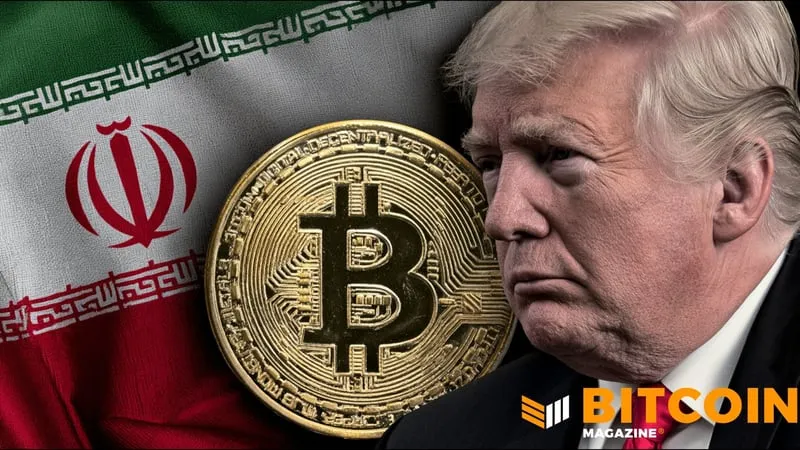
US and Israeli strikes on Iran resumed on Sunday, the first in over a month. Oil rose, stocks fell, and Bitcoin sat at $79,076, unchanged over both 24 hours and seven days. It touched $81,281 last week before easing on Friday, and it’s up close to 30% over the past month.
The same category of headline moved it earlier this year. Bitcoin fell during February’s strikes on Iran and stayed volatile through March and April. Crypto ETFs took $3.2 billion over the past week, the largest weekly inflow since October 2025.
Zypto take: An asset with no issuer has nobody to reassure the market on its behalf, and nobody who can be leaned on either. That’s a large part of why a war headline says less about it now than it did in February.
Bitcoin held in self-custody is yours outright. There’s no issuer sitting between you and it, and that’s the whole difference between an asset you hold and a balance someone keeps for you. Download Zypto App.
Key Takeaways
- Paperwork is a usability question. Japan’s FSA reached that conclusion about stablecoins two years before the rule would land.
- Latency is a setting people either use or switch off. Anything that costs three seconds a payment loses, and this fix arrived without needing a network vote.
- Bitcoin’s response to geopolitics keeps shrinking, which is what happens to an asset that has no announcement coming.
- The adoption worth watching is the kind that removes a step rather than adding a feature. Two of today’s three did exactly that.