Japan reopened its crypto register today after four years, and a 96 billion dollar Korean asset manager put a bond fund on a public blockchain. Optimism voted half a billion tokens away from user airdrops and into a growth fund, and Coldcard started making people generate their own randomness.
- Nomura-backed Laser Digital is the first crypto firm Japan has registered since 2022.
- Shinhan Asset Management, with 96.6 billion dollars under management, is tokenizing a Korean won bond fund on Solana.
- 546.9 million OP tokens, around 50 million dollars, moved from future airdrops into a Strategic Ecosystem Fund.
- Coldcard’s new firmware wants 65 keypresses, 50 dice rolls or 128 coin flips before it will make you a seed.
Access widens at the institutional end while the terms shift underneath. The second half is the one that decides what you hold.
Japan registers its first new crypto firm since 2022
 Source: crypto.news
Japan’s Financial Services Agency registered Laser Digital, Nomura’s digital asset arm, as a crypto asset exchange service provider. It’s the first new registration in roughly four years. Laser Digital can now provide liquidity services to domestic virtual asset service providers, with institutional trading services planned and no launch date given.
The opening follows July’s legislation reclassifying crypto as financial products, with the wider framework due in 2027 and tax provisions in January 2028. A Nomura and Laser Digital survey found 79% of respondents planned to invest in crypto within three years, and the proposed tax change would cut individual rates from roughly 55% to about 20%.
Zypto take: A register that opens once in four years tells you more about the barrier than any survey does. The sharper number is the tax line: individuals face roughly 55% on gains today, and the proposal on the table would cut that to about 20%. That is the figure to watch next in Japan.
Ownership is the part that doesn’t wait for a framework to pass. The Zypto multichain wallet holds 24,000+ assets across 20+ blockchains under keys you control.
A 96 billion dollar Korean manager tokenizes a bond fund on Solana
Source: The Block
Shinhan Asset Management, which runs 96.6 billion dollars, is running a proof of concept to tokenize a Korean won bond fund on Solana with the Solana Foundation, Etherfuse and Orca. Overseas institutional investors buy into an ultra-short-term won bond fund, which is then tokenized.
The structure is under review inside South Korea’s security token framework, which passed in January 2026 and was promulgated in February, with amendments due to take effect in February 2027. Tokenized real-world assets stand at 36.27 billion dollars on RWA.io figures, up 2,200% from 2020.
Zypto take: The detail worth keeping is the choice of chain. A manager running 96.6 billion dollars is putting a regulated fund on a public network rather than a private one.
That choice is what makes real-world assets reachable rather than merely digitized, because a public chain is one anybody can hold on. Solana is one of the 20+ blockchains Zypto App covers.
Optimism votes half a billion tokens away from future airdrops
 Source: Cointelegraph
Optimism governance approved moving 546.9 million OP tokens out of reserves set aside for future user airdrops and into a Strategic Ecosystem Fund for partnerships, institutional adoption and liquidity incentives on OP Mainnet. At the 9 cent price around the vote, that is roughly 50 million dollars.
Optimism has distributed 269.1 million OP across five airdrop rounds and says no further airdrops are planned, describing them as suited to an earlier growth phase rather than its current institutional push. Some delegates pushed back on the reallocation.
Zypto take: Tokens set aside for users were never owed to users, and one vote was enough to settle it. Useful to understand before counting a future airdrop as something you have.
A governance token is governed, which is the honest description of the arrangement. What sits under your own keys is the part nobody gets to vote on, and that is the whole design of Zypto App.
Coldcard makes you supply your own randomness
 Source: Cointelegraph
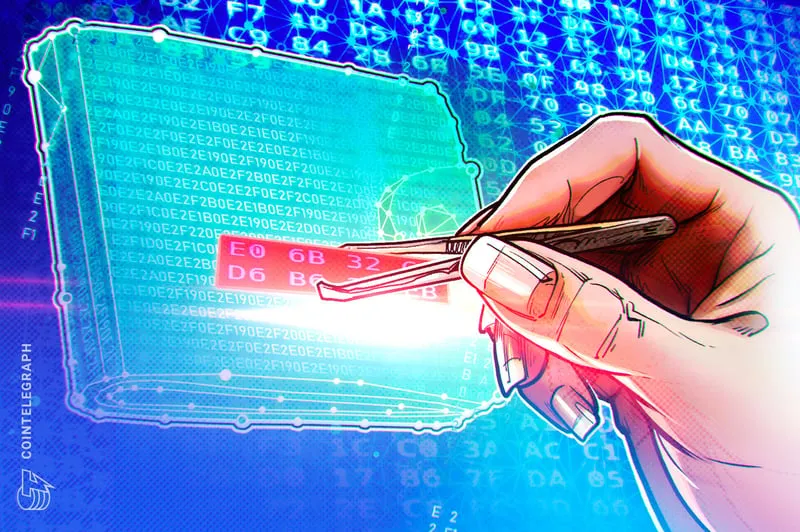
Coldcard shipped firmware requiring user-supplied entropy mixed with the device’s own randomness before it will generate a seed, asking for at least 65 keypresses with unpredictable timing, 50 rolls of a six-sided die or 128 coin flips. The release is 5.6.1 for Mk4 and Mk5 and 1.5.1Q for the Coldcard Q.
It addresses a firmware bug from March 2021 that weakened seed randomness on some devices, cutting key strength from 128 bits to 40 and leaving those wallets brute-forceable without physical access. Confirmed losses reached 1,778 BTC, around 112 million dollars. Coinkite was direct about the limit of the fix: existing seed phrases stay vulnerable after upgrading, so affected users need to generate a new seed before moving funds.
Zypto take: A firmware update can fix how the next seed gets made. It cannot reach back and repair one that was already generated badly, and that asymmetry is the part worth carrying out of this.
Randomness is the foundation everything else in self custody rests on. Keys are worth protecting once they exist too, which is what the Vault Key Card does by keeping them offline until a transaction is authorized over encrypted NFC. Download Zypto App.
Key Takeaways
- Two of Asia’s largest financial markets moved at once, one by reopening its register and one by putting a regulated fund on a public chain.
- Japan’s proposed cut to individual crypto tax, from roughly 55% on gains to about 20%, is the next figure to watch there.
- Regulated money is choosing public chains over permissioned ones, which is the opposite of what the private-ledger era predicted.
- Tokens reserved for users are a plan, not a holding. A governance vote can redirect them, and one just did.
- Randomness is the base layer of self custody, and a fix that improves new seeds leaves old ones exactly as weak as they were.
Related topics