Crypto is being handed the keys to run itself. A blockchain just rewrote its own code by community vote, a central bank put its national currency on a ledger, and a financial giant is wiring Asia’s exchanges into one cross-border network.
- Cardano ran its first hard fork decided entirely by onchain vote, with no central steward required.
- In Kazakhstan, the digital tenge became legal tender, issued straight from the central bank.
- SBI took majority control of Singapore’s Coinhako, its latest move to connect exchanges across the region.
Three different layers of the system are maturing at once: how a network governs itself, how a state issues money, and how value crosses borders. Each one nudges crypto further from experiment and closer to plumbing people use without thinking about it.
Cardano runs its first community-governed hard fork
 Source: Bitcoin.com
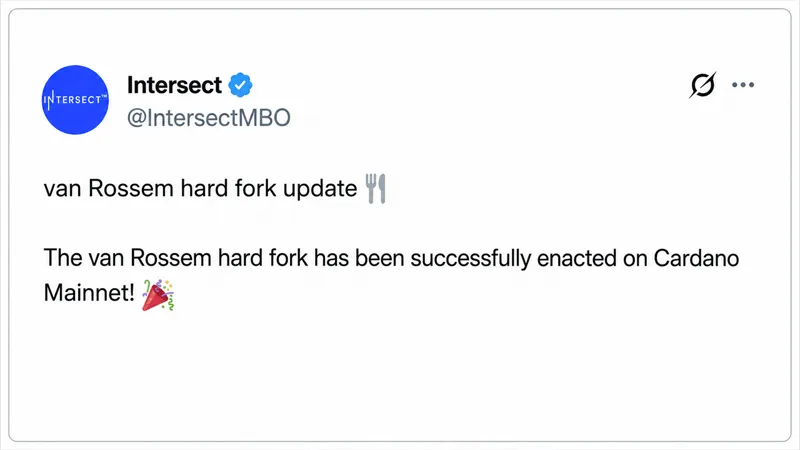
Cardano activated its Van Rossem hard fork on July 18, moving the network to Protocol Version 11 with no reported downtime. The upgrade lowers the cost of running Plutus smart contracts, tightens the network’s ledger rules, and adds cryptographic tools developers had asked for.
What made it notable was the process. This was Cardano’s first major upgrade decided entirely through onchain governance rather than coordinated by Input Output, the company that wrote much of the original code. Delegated representatives approved it with 77.63% support and stake pool operators with 52.7%, each clearing its required threshold.
Zypto take: A token’s holders voting on its own code is ownership reaching all the way down to the protocol, and those rights only ever belong to whoever controls the keys.
Hand your coins to a platform and you hand over the vote with them, which is the quiet case for self custody in Zypto App.
Kazakhstan makes the digital tenge legal tender
 Source: The Astana Times
Kazakhstan recognized the digital tenge as legal tender on July 18, giving it the same official status as physical cash and bank balances. The National Bank of Kazakhstan holds sole authority to issue, circulate and redeem it, and every transaction runs through the bank’s own digital tenge platform.
People reach it through the apps of licensed banks and payment providers rather than a separate wallet. The rollout follows more than two years of pilots, and the design leans toward tracking public spending and government procurement, with savings accounts specifically ruled out.
Zypto take: A state putting its currency on a ledger settles the old question of whether digital money works, and it plainly does.
The difference is control. A central bank digital currency is money its issuer can watch and program, while a dollar stablecoin you hold yourself gives the same instant settlement with none of the permission attached.
SBI takes control of Coinhako to build cross-border rails
 Source: CoinDesk
SBI Holdings, one of Japan’s largest financial groups, completed its acquisition of a majority stake in Singapore’s Coinhako on July 16, with approval from the Monetary Authority of Singapore. Coinhako, which holds a Major Payment Institution license, becomes a consolidated SBI subsidiary.
SBI says it wants to build a global corridor for digital assets by connecting exchanges across markets, and plans to explore tokenization, stablecoins and cross-border settlement through the platform. It follows the group’s agreed purchase of Japanese exchange Bitbank earlier in the year.
Zypto take: SBI is buying a route for value to cross borders as easily as a message travels, and that cross-border movement is the layer everyone is racing to own.
For an ordinary person, Zypto already runs the last mile of it, turning USDC into physical local cash at a participating MoneyGram location.
Key Takeaways
- The day’s stories map onto the same three questions: who governs a network, who issues the money, and who moves it across borders.
- Governance by token vote turns holders into participants, but only self custody actually carries the vote.
- State-issued digital money and open stablecoins will sit side by side, and the dividing line is whether you or the issuer holds the controls.
- As settlement quietly shifts onto these rails, the wallet you control starts to matter more than the account someone controls for you.
Related topics